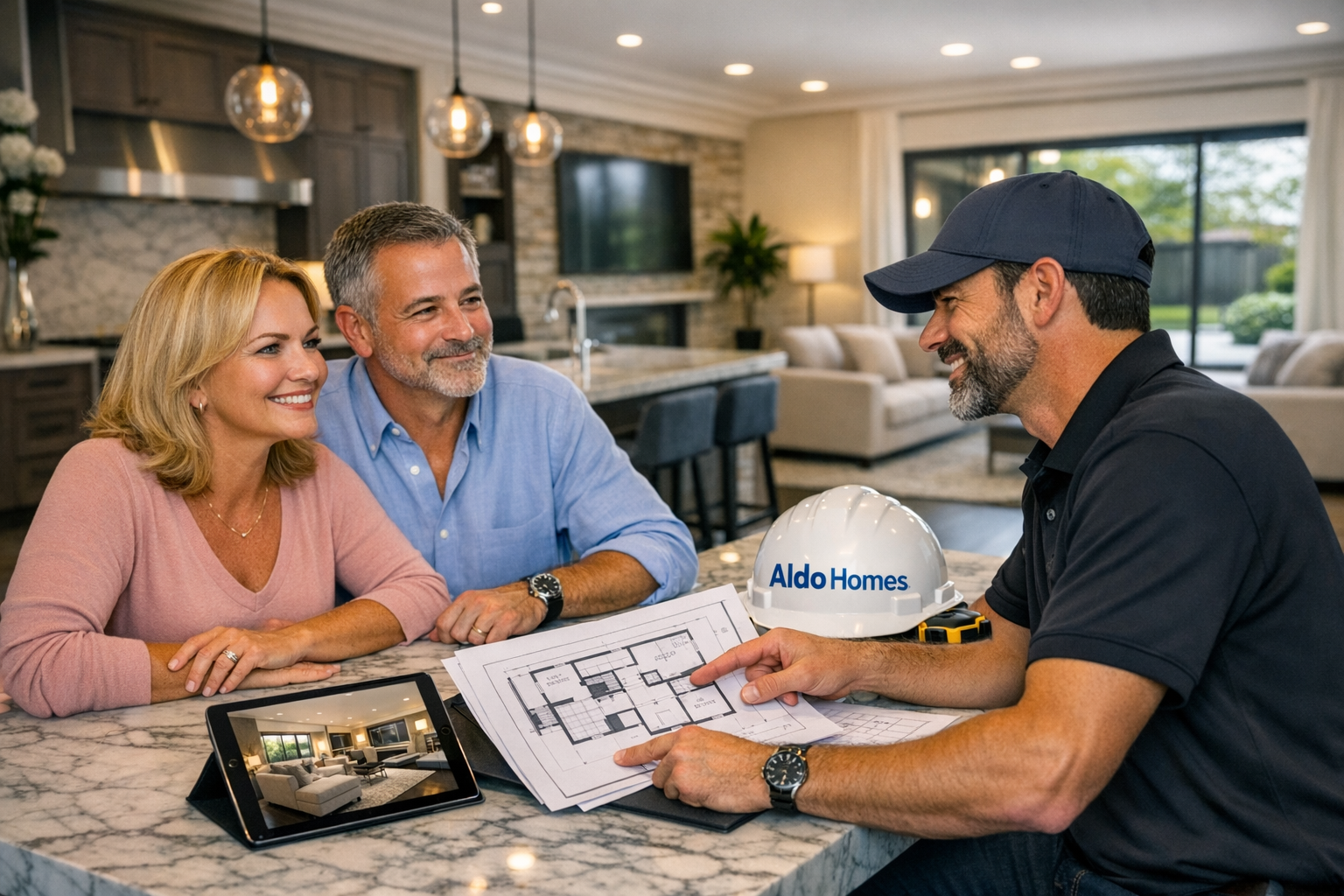
🪟 Benefits and Considerations of the OpenSpace Concept
A complete, homeowner-friendly guide to understanding whether open-concept living is right for your home
Open‑concept living has become one of the most transformative ways to modernize an older home. It brings in more natural light, creates a stronger sense of connection, and reshapes how families interact with their space. For many homeowners, it represents a shift toward a brighter, more social, and more functional main floor — a layout that feels both contemporary and welcoming.
This guide is designed for homeowners who value thoughtful design, long‑term quality, and a renovation process grounded in structural integrity and professional planning. We explore the origins of open‑concept design, the lifestyle benefits itoffers, the technical considerations involved, and the key factors that helpdetermine whether this layout truly supports your home and your family. Creating an open space is a meaningful investment, and the homeowners who benefit most are those who appreciate a well‑engineered, carefully coordinated transformation.
At Aldo Homes, we specialize in delivering open‑concept renovations that are structurally sound, mechanically optimized, and visually seamless. Our team manages engineering, HVAC recalibration, electrical planning, ceiling and flooring integration, and all finishing details under one coordinated process. For homeowners seeking a reliable, fully insured, high‑end renovation partner, we provide the expertise and communication needed to bring an open‑concept vision to life with confidence and precision.
📘 Table of Contents
✨ 2. Benefits of OpenConcept Living
🛠️ 3. Technical Considerations When Creating an Open Space
🧩 4. Is the OpenSpace Concept Right for You?
📊 5. OpenConcept vs. Traditional Layout: Comparison Table
🔍 6. Summary
❓ 7. FAQ
📚 8. Sources
🧭 What Is the OpenSpace Concept?
Understanding how open concept design reshaped modern living.
- Open concept design removes the walls that traditionally separated the kitchen, dining room, and living room, creating one large, flowing space. This approach reflects how families live today—more social, more dynamic, and more connected.
- To appreciate why open-concept layouts are so popular, it helps to understand why older homes were built differently.
Why were older homes compartmentalized?
- Homes built in the 1960s and 1970s were designed around a very different lifestyle. Gender roles were more rigid, with the kitchen considered a workspace for the wife, separate from the formal dining room where the family gathered. Walls served to contain cooking smells, hide the “mess” of meal preparation, and maintain a sense of ritual around family dinners.
- Energy efficiency also played a major role. Smaller rooms were easier and cheaper to heat, especially during Canadian winters. Heating only the room in use was a practical necessity.
Why builders prefer compartmentalized layouts?
- From a construction standpoint, compartmentalized homes were — and still are — cheaper to build. Shorter spans require smaller, less expensive structural components.
- Mechanical systems such as HVAC, plumbing, and electrical are easier to run through interior walls than rerouting them to the perimeter or through engineered beams.
Why are homeowners opening up their spaces today?
- As lifestyles evolved, so did our expectations of how a home should function. Families spend more time together in shared spaces. Cooking has become a social activity. Natural light and visual openness are now associated with comfort, luxury, and modern living. As a result, many homeowners are remodelling older homes to reflect these new priorities.
✨ Benefits of OpenConcept Living
Why homeowners love open spaces — and how they transform daily life
Improved Social Interaction
- One of the greatest advantages of open concept living is the way it enhances family connection.
- Parents can prepare meals while supervising children playing or watching TV in the living room.
- Conversations flow naturally between people cooking, relaxing, or even when working remotely from the main floor.
- When hosting guests, the kitchen becomes part of the social experience—guests gather around the island, enjoy appetizers, and feel included in the activity rather than isolated in a separate room.
Natural Light and Emotional Well-Being
- Removing walls allows sunlight to travel deeper into the home, making the entire main floor feel brighter and more expansive. This has a powerful psychological effect.
- Natural light is linked to improved mood, increased energy, and a greater sense of well-being.
- Many homeowners describe their renovated space as feeling “free,” “uplifting,” or “inspiring”—a reflection of how light influences our emotional environment.
Increased Home Value
- It is widely known that kitchens and bathrooms are the two rooms that most influence a home’s resale value.
- An open concept main floor allows for a custom kitchen with generous storage, a central island, personalized finishes, and a layout that supports modern living.
- When combined with hardwood floors, thoughtful lighting, and cohesive design, the result creates a powerful “wow factor” that attracts buyers and often leads to higher offers.
Flexible Use of Space
- Open layouts adapt easily to changing needs. A portion of the space can temporarily serve as a home office, especially with the rise of remote work.
- Parents can convert part of the area into a play zone while still maintaining visibility.
- The open floor plan can accommodate larger gatherings, holiday celebrations, or overnight guests with ease.
- This space-use flexibility is one of the reasons open concept homes remain desirable across generations.
🛠️ Technical Considerations When Creating an Open Space
Where expert structural planning becomes essential
- While open concept living offers many benefits, achieving it safely and effectively requires careful technical planning. This is where our expertise at ALDO Homes becomes invaluable.
Structural Engineering
- Removing a load-bearing wall is a major structural modification. It requires engineered drawings, the correct type of beam (steel, LVL, or flitch), proper support posts, and city permits.
- The structural solution must be tailored to the home’s existing skeleton, joist direction, span length, and load distribution.
- Poorly executed structural work can compromise the entire home, which is why professional engineering and best-in-trade implementation capabilities are non-negotiable.
HVAC (Heating, Ventilation, and Air Conditioning)
- When walls come down, airflow patterns change. Supply and return lines must be rerouted to maintain proper air balance. Without this, certain areas may become too hot or too cold. Our partner engineers ensure the HVAC system is recalibrated to support the new layout.
Electrical Planning
- Electrical design plays a major role in how the space feels and functions. Open concept layouts benefit from multiple lighting zones, dimmable pot lights, accent lighting, and strategically placed 3 way switches along natural walking paths. Our electricians create layouts that enhance both usability and ambiance.
Plumbing Considerations
- Plumbing affects the placement of the sink (island vs. perimeter), dishwasher, the fridge water line, and the drainage system. Proper venting is essential to prevent clogging and ensure smooth operation. Our structural expertise allows us to determine the safest and most efficient venting path from the roof.
Noise Control
- Open spaces allow sound to travel more easily. To mitigate this, we recommend installing “safe and sound” insulation in the ceiling. This reduces noise transfer, increases insulation value, and improves fire resistance.
Ceiling and Flooring Impact
- When interior walls are removed, both the ceiling and the flooring are directly affected. The ceiling drywall must be opened to install the new structural beam, modify joists if a flush installation is required, and reroute any electrical, HVAC, or plumbing lines that previously ran through the wall. We recommend replacing the entire ceiling (new drywall, mudding, sanding, painting) to achieve a seamless, uniform appearance. The natural light will expose every imperfection caused solely by patching.
- The flooring is also impacted because interior walls are typically built before hardwood flooring is installed. Removing a wall leaves a visible gap in the hardwood where the bottom plate once sat. This gap must be repaired, patched, or—in cases where matching the existing hardwood is not possible—replaced entirely. Many homeowners choose to refinish or replace the entire main floor flooring to ensure a consistent look.
- These ceiling and flooring repairs add to the overall renovation cost, which is why it is important to plan ahead and include all related expenses in the initial interior alterations contract.
Renovation Impact
- A full main floor transformation is invasive and can take several months. Some homeowners choose to stay in the home during construction, while others temporarily relocate for a smoother experience. We help you plan for whichever option best suits your family.
🧭 Is the OpenSpace Concept Right for You?
A thoughtful guide to deciding whether open-concept living fits your lifestyle
Open concept living is right for you if you:
- Want a brighter, more modern main floor
- Enjoy hosting and socializing
- Prefer a spacious, airy feel
- Value sightlines between the kitchen, dining, and living areas
- Want to increase your home’s resale value
- Are comfortable with some noise travel
- Are you planning a long-term investment in your home
It may not be ideal if you:
- Need quiet, separate rooms
- Prefer traditional, defined spaces
- Rely heavily on wall space
- Want to avoid structural or mechanical modifications
📊 OpenConcept vs. Traditional Layout: Comparison Table
| Feature | OpenConcept Layout | Traditional Layout |
|---|---|---|
| Natural Light | Excellent — sunlight travels freely across the main floor | Moderate — walls block light between rooms |
| Noise Control | Low — sound travels easily without barriers | High — walls contain noise within each room |
| Privacy | Low — fewer defined spaces for quiet activities | High — separate rooms allow privacy and separation |
| Renovation Cost | Higher — requires engineered beams, HVAC/electrical rerouting | Lower — minimal upgrades needed |
| Resale Appeal | Very high — strong buyer demand for open layouts | Moderate — depends on buyer preferences |
| Flexibility of Use | High — adaptable for office, play area, entertaining | Moderate — rooms have more fixed functions |
| Best For | Modern living, social households, entertaining | Quiet households, defined routines, traditional preferences |
🔍 Summary
What are the benefits and considerations of an open-space concept?
In summary, open-concept living offers improved social interaction, more natural light, greater flexibility in space use, and a higher resale value. However, it requires structural engineering, HVAC and electrical rerouting, potential plumbing changes, and may increase noise travel. It’s ideal for modern, social lifestyles but less suited to families who need privacy or quiet, defined rooms.
❓ FAQ
❓ FAQ
Why were older homes built with compartmentalized rooms?
Because of heating efficiency, traditional gender roles impacting the use of space, and construction cost savings, smaller rooms became more practical.Does open concept living improve natural light?
Yes. Removing walls allows sunlight to travel deeper into the home, making the main floor feel brighter and more expansive.Why is removing a wall not a simple task?
Many interior walls are load-bearing and require engineered beams, proper supports, and city permits.How does open concept design affect HVAC performance?
Airflow patterns change when walls are removed, requiring supply and return lines to be rerouted to maintain proper temperature balance and airflow volume.What electrical changes are needed in an open concept layout?
Lighting zones, pot lights, accent lighting, and 3‑way switches must be redesigned to suit the new open space.How does plumbing impact the decision to add an island?
The sink, dishwasher, and venting system must be rerouted safely, which may require careful planning to maintain proper drain slopes and avoid clogging.Why does flooring often need to be replaced during an open concept renovation?
Removing walls exposes gaps in the hardwood where the bottom plate used to sit, requiring patching or full replacement for a seamless look.Why is the ceiling usually replaced during this renovation?
Installing a structural beam and rerouting mechanical systems requires opening the ceiling, and full replacement is the only way to achieve a uniform finish.Is noise a concern in open concept homes?
Yes. Sound travels more easily without walls, which is why installing “safe and sound” insulation in the ceiling is highly recommended.How long does a full main floor transformation typically take?
It can take several months, depending on structural work, mechanical rerouting, manufacturing of the new custom kitchen and countertops, and other finishing requirements.Is open concept living suitable for families needing quiet spaces?
Not always. Families who need privacy or defined rooms for work or study may prefer semi‑open or traditional layouts.Does open concept living increase home value?
Yes. Modern buyers often prefer open layouts, especially when paired with a custom kitchen and cohesive design.📚 Sources
📚 Sources
Below is the list of official sources used to produce this page.
Click to expand Sources
| Topic | Official Source | Link |
|---|---|---|
| Ontario Building Code – Structural Requirements | Government of Ontario | https://www.ontario.ca/laws/regulation/120332 |
| Building Permits & Structural Modifications | Ontario Building Code Act | https://www.ontario.ca/laws/statute/92b23 |
| HVAC Requirements & Standards | Ontario Building Code – Part 9 (Mechanical) | https://www.ontario.ca/laws/regulation/120332 |
| Electrical Safety Requirements | Electrical Safety Authority (ESA) | https://www.esasafe.com |
| Plumbing & Drainage Requirements | Ontario Building Code – Plumbing | https://www.ontario.ca/laws/regulation/120332 |
| Noise Control & Insulation Standards | National Building Code of Canada | https://www.nrc.canada.ca |
| Energy Efficiency & Heating Considerations | Natural Resources Canada | https://natural-resources.canada.ca |
| Home Renovation Safety & Permits | Government of Ontario – Renovation Guidelines | https://www.ontario.ca/page/renovate-your-home |
⚖️ Disclaimer
© 2026 Aldo Homes. This guide offers general information only and may not reflect all project‑specific requirements. Structural and mechanical changes must be assessed by qualified professionals. For homeowners planning an open‑concept renovation and seeking a reliable, fully insured team, Aldo Homes is available to review your plans.