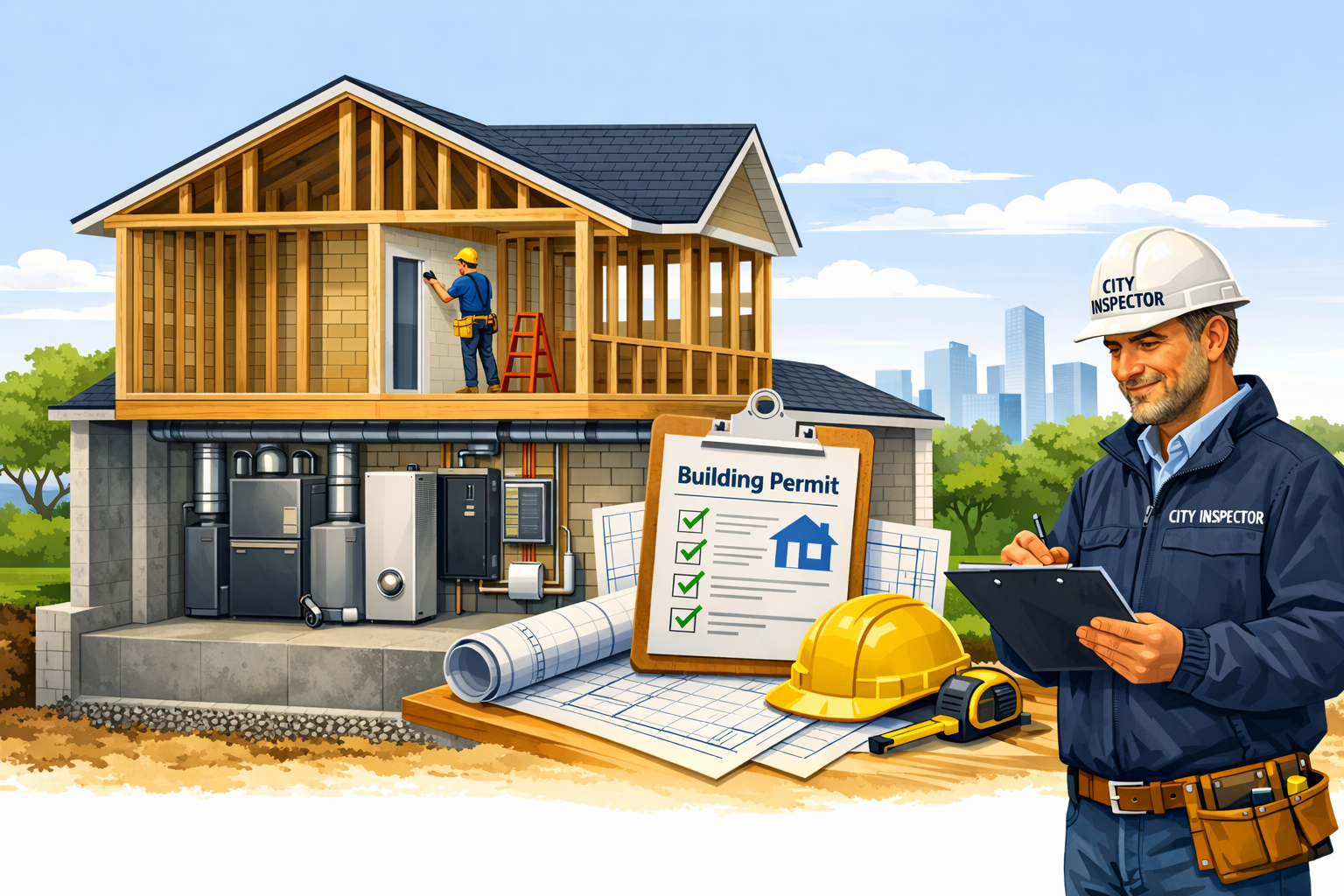
Understanding when a building permit is required is essential for any homeowner planning a renovation in Ontario. Permits ensure that structural changes, plumbing modifications, HVAC adjustments, and basement conversions meet the safety standards set out in the Ontario Building Code. Homeowners who take this step benefit from clarity, smoother approvals, and long‑term protection of their property.
Although these rules apply across Southern and Central Ontario, this guide focuses on how they specifically affect homeowners in Toronto and the Greater Toronto Area (GTA), where most renovation projects fall under the same Ontario Building Code requirements.
This information is especially valuable for homeowners who want their renovation handled with professionalism, accuracy, and care. The permit process involves detailed architectural drawings, mechanical layouts, neighbour coordination when required, and proper authorization — all indicators of a renovation approach built on diligence and accountability. These are homeowners who see their property as a major investment and want a team that prioritizes safety, communication, and compliance at every stage.
Aldo Homes is structured around that standard. We coordinate design, engineering, permit documentation, and construction under one umbrella, ensuring every requirement is met by qualified, insured professionals. From working with partner engineers on structural, architectural, mechanical and zoning requirements to preparing complete permit packages to providing homeowners with liability insurance certificates, our process is designed to deliver a renovation experience that is safe, transparent, and fully compliant. For homeowners who value peace of mind and long-term quality, we provide the expertise and reliability needed to protect both their home and their investment.
Table of Content
⚡ 2. Electrical Work Is NOT Covered by Building Permits
🎨 3. Renovations That Do Not Require a Building Permit
📄 4. What Documents Are Required for a Standard Building Permit Application?
📊 5. Permit Requirements in Toronto & the GTA
🔍 6. Summary
❓ 7. Frequently Asked Questions
📚 8. Sources
🧱 When You Do Need a Building Permit in Toronto and the GTA
Building permits are required for renovations that impact the home’s structure, safety, or essential systems. These are the most common examples:
Structural Changes
- Removing or altering load-bearing walls or creating large openings (such as a new patio door) requires a permit.
- These changes directly affect the building’s stability and must be reviewed by the City.
Basement Finishing or Conversion
- Creating a basement apartment, adding bedrooms, or enlarging windows for egress requires a permit.
- This ensures proper fire separation, ventilation, and emergency escape routes.
Plumbing Modifications
- Adding or relocating plumbing fixtures requires a permit because drain lines, venting, and water supply must meet OBC standards to prevent leaks, sewer gas, or contamination.
HVAC Changes
- Installing or relocating ductwork, adding heating/cooling systems, or modifying ventilation requires a permit.
- Proper airflow and combustion safety must be verified by the building department.
Window or Door Enlargement
- Changing the size of openings affects structural framing and requires municipal review.
Change of Use
- Converting a garage, attic, or basement into a dwelling unit requires a permit to ensure the new space meets all OBC requirements for safety, fire protection, and occupancy.
⚡ Electrical Work Is NOT Covered by Building Permits
Electrical work in Ontario is not reviewed by municipal building departments. It is regulated separately by the Electrical Safety Authority (ESA).
An ESA permit is required for:
- New circuits
- Subpanels
- Rewiring
- Electrical service upgrades
Municipal inspectors do not inspect electrical work. Our partner electricians do file an ESA permit directly with the ESA.
🎨 Renovations That Do Not Require a Building Permit
Cosmetic or non-structural improvements typically do not require a permit, including:
- Painting or wallpapering
- Replacing flooring
- Installing cabinets or countertops
- Replacing plumbing or electrical fixtures like-for-like
These updates do not affect structural integrity or building code compliance.
📄 What Documents Are Required for a Standard Building Permit Application?
Applying for a building permit requires submitting a complete package of documents that demonstrate your renovation is safe, code-compliant, and properly authorized. While each municipality may have its own submission portal and processes, the core requirements are consistent across Toronto and the GTA.
-
Municipal Building Permit Application Form
- Each municipality provides its own standardized form on the Building Department’s website.
- This form outlines the project scope, applicant information, and type of work being proposed.
-
Authorization or Representation Letter
- If a contractor, designer, or engineer applies on behalf of the homeowner, municipalities require written confirmation that the homeowner has authorized them.
- This ensures only approved professionals can submit documents or make decisions on the homeowner’s behalf.
-
Architectural & Structural Drawings
- Most projects require detailed drawings prepared by qualified designers or engineers.
- These drawings show floor plans, elevations, structural changes, and mechanical layouts, allowing the City to verify compliance with the Ontario Building Code.
-
Neighbour Consent (When Applicable)
- In townhouses, semidetached homes, or duplexes, neighbour approval may be required if the renovation affects a shared party wall. This ensures both property owners understand the scope of work and that risks to the shared structure are properly managed.
- At Aldo Homes, we provide proof of insurance to neighbours to demonstrate that all risks are mitigated and that the work will be performed safely and professionally.
-
Committee of Adjustment / Minor Variance Documentation
- If your renovation involves a change of use or does not fully comply with zoning bylaws, you may need to apply to the Committee of Adjustment for a minor variance.
- Our partner engineering firm specializes in preparing these applications, and Aldo Homes assists homeowners throughout the process.
-
Mechanical, Plumbing & HVAC Documentation
- Municipalities may require plumbing layouts, HVAC design calculations, and ventilation plans to confirm compliance with OBC requirements.
-
Electrical Work — ESA Permit (Separate from Building Permit)
- Electrical work requires an ESA permit, not a municipal building permit.
- Only a licensed electrician can file this permit directly with the Electrical Safety Authority.
-
Site Plan or Survey
- For additions or exterior alterations, a site plan or survey may be required to confirm zoning compliance and property boundaries.
-
Proof of Ownership
- Some municipalities may request documentation confirming that the applicant is the legal owner of the property. This typically occurs when a recent sale has taken place, and the municipal property tax database has not yet been updated with the new owner’s information.
- In these cases, the City requires temporary proof to ensure that only authorized individuals can apply for permits affecting the home.
- At Aldo Homes, when we apply for permits on behalf of clients who have just purchased a property, we provide the municipality with a copy of the first page of the Agreement of Purchase and Sale, which clearly identifies the new owners.
- If additional confirmation is needed, the homeowner’s real estate lawyer can also issue supporting documentation verifying the completed transaction.
- This ensures the permit application proceeds without delay, even before the municipal records reflect the updated ownership
-
Applicable Fees
- Permit fees must be paid at the time of application.
- Fees vary by municipality and are typically based on the size and type of project.
📊 Permit Requirements in Toronto & the GTA
| Renovation Type | Permit Required? | Notes |
|---|---|---|
| Structural changes | Yes | Affects building stability |
| Basement finishing / basement apartment | Yes | Fire separation & egress required |
| Plumbing relocation | Yes | Must meet OBC plumbing standards |
| Electrical rewiring / new circuits | ESA permit only | Not handled by City |
| HVAC modifications | Yes | Ensures proper ventilation & safety |
| Window/door enlargement | Yes | Structural framing affected |
| Cosmetic updates | No | No structural impact |
| Change of use | Yes | Must meet full dwellingunit requirements |
🔍 Summary
Do I need a building permit for residential renovations in Toronto and the GTA?
Yes. In Toronto and across the GTA, building permits are required for renovations involving structural changes, plumbing, HVAC modifications, basement finishing, or changes in building use. Electrical work is regulated separately by the Electrical Safety Authority (ESA) and requires an ESA permit, not a municipal building permit. Cosmetic updates like painting or replacing flooring do not require permits.
❓ Frequently Asked Questions
Do I need a building permit for residential renovations in Ontario?
Yes. In Toronto and the GTA, building permits are mandatory for most residential renovations that affect structural integrity, plumbing, HVAC, fire safety, or the use of a space. Municipalities enforce the Ontario Building Code (OBC), and permits must be issued before work begins.What types of renovations require a building permit?
Permits are required for structural changes (removing or altering load-bearing walls), basement finishing or conversion, plumbing modifications, HVAC changes, window or door enlargement, and change of use (converting a garage, attic, or basement into a dwelling unit).Do I need a permit for a basement apartment or secondary suite?
Yes. Creating a basement apartment, adding bedrooms, or enlarging windows for egress requires a building permit. This ensures proper fire separation, ventilation, and emergency escape routes are in place.Does changing the use of a room or space require a permit?
Yes. Converting a garage, attic, or basement into a dwelling unit requires a permit to ensure the new space meets all OBC requirements for safety, fire protection, and occupancy.Is electrical work covered by a building permit?
No. Electrical work in Ontario is not reviewed by municipal building departments. It is regulated separately by the Electrical Safety Authority (ESA). Municipal inspectors do not inspect electrical work.When do I need an ESA permit?
An ESA permit is required for new circuits, subpanels, rewiring, and electrical service upgrades. Your electrician must file this permit directly with the Electrical Safety Authority — it is separate from the municipal building permit process.What renovations do NOT require a building permit?
Cosmetic or non-structural improvements typically do not require a permit, including painting or wallpapering, replacing flooring, installing cabinets or countertops, and replacing plumbing or electrical fixtures like-for-like. These updates do not affect structural integrity or building-code compliance.What documents do I need to apply for a building permit?
A standard application requires: (1) Municipal Building Permit Application Form, (2) Authorization or Representation Letter, (3) Architectural and Structural Drawings, (4) Neighbour Consent (when applicable), (5) Committee of Adjustment / Minor Variance Documentation (if needed), (6) Mechanical, Plumbing and HVAC Documentation, (7) ESA Permit for electrical work (filed separately), (8) Site Plan or Survey, (9) Proof of Ownership, and (10) Applicable Fees.Do I need my neighbour's consent for a renovation?
In townhouses, semi-detached homes, or duplexes, neighbour approval may be required if the renovation affects a shared party wall. This ensures both property owners understand the scope of work and that risks to the shared structure are properly managed. Aldo Homes provides proof of insurance to neighbours to demonstrate that all risks are mitigated.What is a Committee of Adjustment or Minor Variance?
If your renovation involves a change of use or does not fully comply with zoning bylaws, you may need to apply to the Committee of Adjustment for a minor variance. Aldo Homes' partner engineering firm specializes in preparing these applications and assists homeowners throughout the process.What if I just bought the property — do I need proof of ownership?
Some municipalities may request documentation confirming you are the legal owner, especially when a recent sale has taken place and the municipal property-tax database has not yet been updated. Aldo Homes provides the municipality with a copy of the first page of the Agreement of Purchase and Sale. If additional confirmation is needed, the homeowner's real estate lawyer can also issue supporting documentation.Do I need architectural drawings for a permit?
Most projects require detailed drawings prepared by qualified designers or engineers. These drawings show floor plans, elevations, structural changes, and mechanical layouts, allowing the City to verify compliance with the Ontario Building Code.When is a site plan or survey required?
For additions or exterior alterations, a site plan or survey may be required to confirm zoning compliance and property boundaries.How much do building permit fees cost?
Permit fees must be paid at the time of application. Fees vary by municipality and are typically based on the size and type of project. Contact your local building department for the current fee schedule.Is there a quick summary of what needs a permit and what doesn't?
Quick reference — Structural changes: Yes. Basement finishing/apartment: Yes. Plumbing relocation: Yes. Electrical rewiring/new circuits: ESA permit only (not handled by City). HVAC modifications: Yes. Window/door enlargement: Yes. Cosmetic updates: No. Change of use: Yes.📚 Sources
Below is the list of official sources used to produce this page.
View Sources
| Source | Link | What It Contributed |
|---|---|---|
| Ontario.ca – Building Permits: Citizen’s Guide to Land Use Planning | https://www.ontario.ca/document/citizens-guide-land-use-planning/building-permits | Official provincial explanation of when permits are required, how to apply, and enforcement under the Building Code Act. |
| Ontario Building Permit Guide 2026 — Fees, Process and Requirements | https://www.buildingpermitguide.ca/ontario-2026 | Current permit fees, timelines, and documentation standards across GTA municipalities. |
| PermitCheck — Ontario Permit Requirements Guide 2025 | https://www.permitcheck.ca/ontario-building-permit-guide | Quick reference for residential projects and exemptions including decks, sheds, basements, and structural changes. |
| Drafting and Design Co. — Building Permit Requirements Explained for Ontario Residents | https://www.draftinganddesignco.ca/blog/building-permit-requirements-ontario | Overview of safety, legal compliance, and inspection stages for residential renovations. |
| Renovation Permits Ontario — Complete 2025 Guide | https://www.renovationpermitsontario.ca/guide | Clarified structural, plumbing, and HVAC permit triggers and typical processing times. |
⚖️Disclaimer
© 2026 AldoHomes. This guide is for general educational purposes and may not reflect the specific requirements of every municipality or project. Building permit rules, zoning bylaws, and inspection procedures vary across Ontario, and final approval is determined by municipal review and the Ontario Building Code. Homeowners should consult qualified professionals before beginning any renovation involving structural, plumbing, HVAC, electrical, or change-of-use work. For a reliable, fully insured, and code‑compliant renovation, Aldo Homes is available to review your plans and provide tailored guidance for your home.